Most people want to run a virtual summit but have no idea how many moving parts are involved until they start.
Between choosing a topic, finding speakers, managing tech, and keeping everything on schedule, it is easy to feel overwhelmed or miss critical steps.
That is why having a battle-tested virtual summit checklist matters.
When you follow a proven structure, the entire process becomes predictable, organized, and far less stressful.
After running 15 summits and helping hundreds of coaches and experts do the same, I have learned that successful summits are built on simple, repeatable systems.
In this guide, you’ll find the complete set of checklists you need to plan, promote, and run a virtual summit that delivers real results for you and your audience.
What Is a Virtual Summit?
A virtual summit is an online event featuring multiple experts teaching around a specific topic through interviews, workshops, or live sessions.
It’s like a digital conference that helps attendees learn from anywhere.
Hosts use summits to build authority, grow their email list, collaborate with leaders, and generate revenue without the costs of in-person events. If you want a deeper breakdown, here are the core benefits of virtual events
What Is a Virtual Summit Checklist?
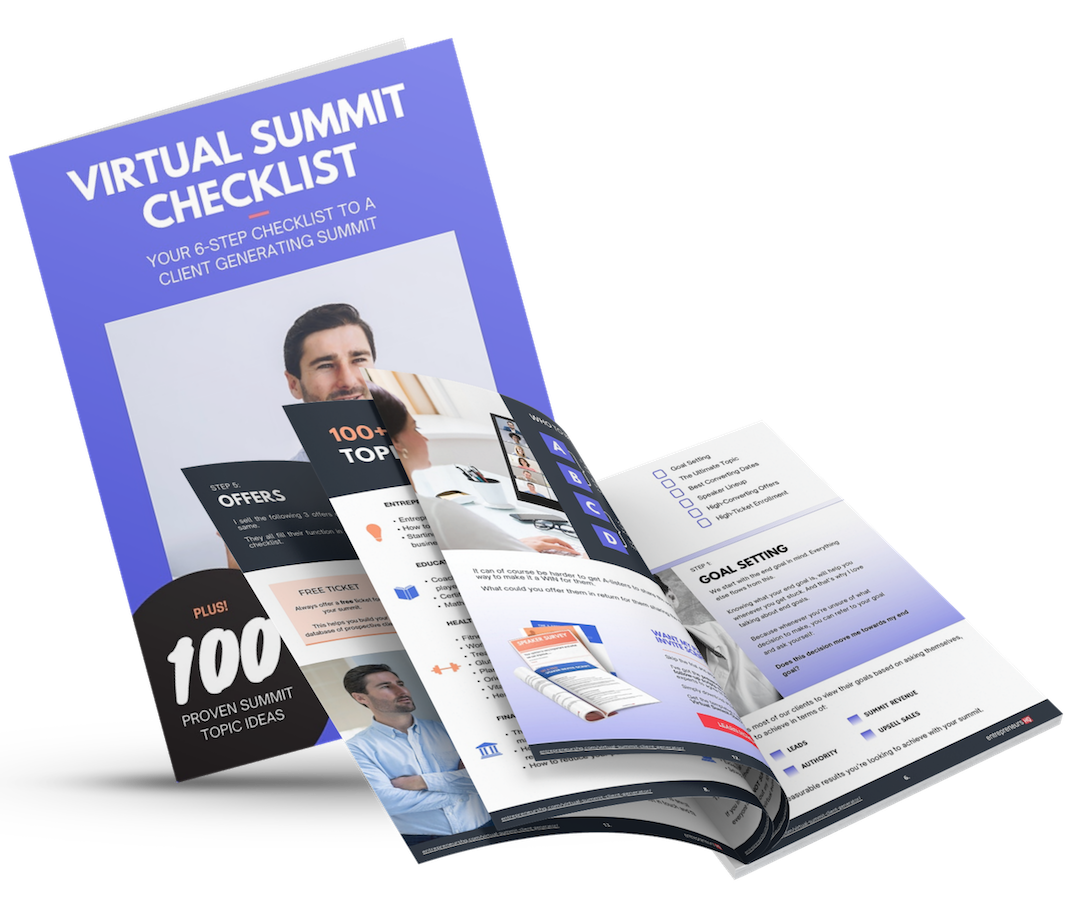
A virtual summit checklist is a step-by-step list that guides you through planning, promoting, and running your summit.
It keeps you organized, reduces overwhelm, and prevents common mistakes like tech issues, missing assets, or last-minute scrambling.
If you want hands-on support with any of these steps, you can explore our virtual summit services.
7 Checklists to Host a Virtual Summit
To host a successful virtual summit, you move through several clear checklists. Each one guides a different part of the process:
- Pre-Planning Checklist
Choose topic, goals, format, timeline, and tools. - Speaker Outreach and Management Checklist
Find speakers, invite them, collect assets, manage communication. - Content and Presentation Checklist
Set session types, guidelines, descriptions, and file organization. - Tech Setup Checklist
Build pages, upload sessions, test systems, create backups. - Marketing and Promotion Checklist
Plan promos, prepare materials, email list, social content. - During the Summit Checklist
Release sessions, engage attendees, support speakers, track performance. - Post-Summit Checklist
Send thank-yous, deliver replays, gather feedback, review results.
Pre-Planning Checklist
Before any speaker outreach, page design, or promotion, your summit needs a solid strategic foundation. This phase determines whether the rest of the project feels organized and clear or rushed and stressful.
Clarify your topic and audience
Start by choosing a specific, outcomes-focused topic. Broad themes like “Health and Wellness Summit” or “Marketing Mastery Summit” sound impressive, but they do not convert well because they try to appeal to everyone.
Instead, choose a tight angle that solves one clear problem for a specific group. Examples include “The 5-Day Plant-Based Starter Summit for Busy Parents” or “The Local Business LinkedIn Growth Summit.”
The more specific the audience and outcome, the easier it becomes to attract great speakers and convert attendees.
Validate your summit topic before committing
Do not assume people want your summit. Check forums, Facebook groups, Reddit threads, and your email list to see what problems your audience is actually talking about.
Look for repeated frustrations, questions, or gaps. You can even send a one-question survey: “If I hosted a free virtual summit on one topic, which would you want most?” Early validation saves weeks of work.
Define your main goal
Every summit can produce multiple results, but you need one priority. Do you want email list growth, client enrollment, course sales, brand authority, or future partnerships?
If the main goal is lead generation, focus on high-demand speakers and broad audience reach.
If the goal is client enrollment, design sessions that naturally lead into your offer. And if you’re building a new coaching offer, this starting a coaching business checklist pairs perfectly with your summit planning.
If partnerships are the goal, prioritize collaborations and co-marketing opportunities.
Create your audience transformation statement
This is a simple sentence that guides every decision:
“By the end of this summit, attendees will ______.”
If you cannot fill that blank clearly, your summit theme is not tight enough.
Choose the summit format
Different formats suit different goals.
- Live summits are great for engagement and high-ticket sales.
- Pre-recorded summits reduce stress and allow more polished content.
- Hybrid summits balance both, with live Q&A and recorded sessions.
Choose the format you can deliver confidently within your timeline.
Plan your timeline
A typical summit takes 8 to 12 weeks, but break this into phases:
- Weeks 1–2: Topic validation and planning
- Weeks 2–4: Speaker outreach
- Weeks 4–6: Session recording
- Weeks 5–8: Tech setup and marketing prep
- Weeks 7–10: Promotion
Structure prevents everything from happening last minute.
Choose your tech stack based on your budget
You do not need expensive tools. A lean setup might include Zoom, a landing page builder, an email platform, and a simple summit host platform.
If you have more budget, you can add automated webinar tools, advanced community platforms, and detailed analytics. Start simple and build as you grow.
A strong pre-planning phase creates a predictable, stress-free runway for your entire summit.
If you need help picking the right software, here’s a full breakdown of the best virtual summit platforms.
Speaker Outreach and Management Checklist
Your speakers are the heart of your summit experience. Strong, aligned speakers elevate your event, bring built-in audiences, and deliver sessions that genuinely help attendees.
Poor speaker management, on the other hand, leads to delays, missing assets, weak promotion, and confused participants.
Identify aligned speakers strategically
Your ideal speakers should serve the same audience but solve different parts of the problem your summit addresses. Make a list of people who:
- Already create content on your topic
- Run complementary programs
- Have active email lists
- Have audiences that overlap with yours
- Are reliable and communicative
Do not choose speakers solely based on follower count. Engagement and alignment matter more.
Create strong outreach messages
Your invitation should answer three questions immediately:
- Why them?
- What is the summit about?
- What do they get out of participating?
Make your message short and respectful of their time. You can also include optional incentives like affiliate commissions or promo swaps.
Follow up with consistency and professionalism
Expect to send two or three follow-ups. People are busy. A polite follow-up often gets a yes when the first email is missed.
Evaluate speaker quality
Look at their past presentations. Are they engaging? Do they share actionable content? Are they easy to understand? Look for speakers who bring both teaching ability and promotional enthusiasm.
Collect speaker assets early and in one place
Request all assets upfront:
- Bio
- Headshot
- Session title
- Session description
- Social links
- Website
Use a simple Google Form to streamline this.
Provide clear expectations and deadlines
Speakers love clarity. Tell them exactly:
- When recordings are due
- How long their session should be
- What file format you need
- Whether they can include an offer
- When promotion begins
Your goal is to remove friction so speakers feel supported.
Schedule recordings or live sessions
Use a scheduling tool to avoid endless back-and-forth emails. Always send confirmation messages and reminders. If you are recording interviews, show up early and test audio on every call.
Keep communication warm and collaborative
Send check-ins, encouragement, and updates. When speakers feel valued, they naturally become more willing to support and promote your event. People always promote events they feel proud to be part of.
Mastering speaker outreach and management makes your entire summit run smoother.
For a full training on how to choose the right theme, plan your strategy, and set up every part of your summit, check out the Virtual Summit Masterclass.
Content and Presentation Checklist
Strong content is the heart of your summit. This is where attendees receive the transformation they signed up for.
Decide on session types
A mix of formats keeps your event dynamic:
- Interviews
- Workshops
- Keynotes
- Panels
- Case studies
Choose formats that make your speakers shine.
Create presentation guidelines
Tell speakers:
- How long the session should be
- Whether slides are required
- What format you prefer
- What topics to avoid or include
- Whether they can include an offer
Clear guidelines produce better sessions.
Write session descriptions
Descriptions should be specific, benefit driven, and easy to skim. These go on your landing pages and help attendees understand the value.
Prepare your own sessions
Your opening session sets the tone. Your closing session directs attendees toward next steps and creates opportunities for deeper engagement.
Upload and organize all content
Label files clearly and upload them ahead of schedule. Test all videos for quality, sound, and playback.
If you want inspiration on session formats and creative angles, explore this list of virtual summit ideas.
Tech Setup Checklist
Technology can feel overwhelming, but it does not have to be. Most issues arise from lack of testing.
Summit website or landing pages
Create:
- A homepage
- A registration page
- A speaker lineup page
- A schedule page
- A thank you page
Keep the design clean and easy to navigate.
Registration and confirmation flow
Test every step:
- Form
- Confirmation message
- Welcome email
- Calendar links
Attendees should feel guided and supported.
Build the summit platform
Upload sessions, schedule releases, and set access permissions. Add captions or transcripts if relevant.
Set up backup systems
Keep copies of everything in a cloud folder and one local folder. If anything fails, you have quick replacements.
Test the full experience
Check:
- Page links
- Buttons
- Video quality
- Audio quality
- Mobile experience
- Emails
- Countdown timers
Testing prevents the majority of issues that frustrate attendees.
Marketing and Promotion Checklist
Your summit may have great content and strong speakers, but without effective promotion, people will not see it.
Marketing is where your summit gains momentum, registrations, and excitement. This is the stage where your event comes alive.
Create a promotional calendar that drives urgency
Structure your calendar in phases:
- Week 1: Teasers and early registration
- Week 2: Speaker spotlights
- Week 3: Main promotional push
- Week 4: Final countdown and last-chance reminders
Map out every email, post, ad, and speaker promotion date. Consistency drives registrations more than volume.
Build a complete speaker promo kit
Make promoting easy for speakers by giving them:
- Email swipe copy
- Social posts
- Short video scripts
- Graphics with their headshot
- Promo calendar
- Recommended send dates
When you remove friction, speakers promote more often and with more enthusiasm.
Develop an email promo plan with structure
Your email list is one of your most valuable promotional assets. Create an email sequence that includes:
- A teaser announcement
- A full event announcement
- Speaker highlights
- What attendees will learn
- Reminders
- A last-chance email
Use clear subject lines and short paragraphs so your message feels easy to read.
Craft a social promo plan for each platform
Different platforms require different styles. For example:
- LinkedIn: educational tips and speaker quotes
- Facebook: personal stories and community posts
- Instagram: carousel tips, reels, and behind-the-scenes previews
- YouTube: short video trailers
Mix value and promotion in a natural way.
Motivate speakers to promote consistently
You can increase speaker promo rates by:
- Encouraging friendly competition
- Highlighting speakers who promote
- Providing weekly reminders
- Showing sample posts
- Offering affiliate commissions
The easier you make it, the more traction you get.
Optional paid ads for amplification
Paid ads to warm audiences, lookalikes, or website visitors can boost registrations without needing a huge budget.
Retarget people who land on your registration page but do not sign up.
Track performance and refine quickly
Look for:
- Signups per day
- Conversion rate from page views to registrations
- Which speakers bring the most traffic
- Which messages resonate
If signups dip, adjust your messaging or highlight different angles of your summit.
Promotion is the engine of your summit. A strong promotional plan ensures your content and speakers reach the audience that needs them most.
During-Summit Checklist
This is the delivery phase. Your job is to create a smooth, engaging event.
Send daily reminders
Short morning emails guide attendees through each day’s content.
Manage sessions
If sessions are live:
- Join early
- Test audio
- Brief speakers
- Keep time
If sessions are pre-recorded:
- Release them on schedule
- Monitor playback performance
Moderate chat or community
Ask questions, share insights, and keep the conversation moving. Community energy increases attendee satisfaction.
Support your speakers
Thank them publicly, keep them informed, and make them feel appreciated.
Track attendance and engagement
Note which sessions perform well and check out these virtual event statistics. The data will help with future events.
Post-Summit Checklist
Your follow up determines how much long-term value your summit produces.
Send thank you emails
Appreciate both speakers and attendees. Gratitude strengthens relationships.
Deliver replay access
Make it easy for attendees to continue learning.
Collect feedback
Ask what people loved, what could be improved, and what topics they want next.
Gather testimonials
Screenshots and quotes help with future promotion and credibility.
Analyze performance
Review:
- Registrations
- Attendance
- Conversion rates
- Speaker performance
- Revenue
This helps refine your next event.
Plan your next offers
Share additional resources, workshops, memberships, or coaching programs. A summit naturally leads into deeper opportunities.
Decide on evergreen options
Many summits continue delivering leads and sales long after they end. You can:
- Turn sessions into an evergreen funnel
- Use them as bonuses
- Add them to a membership
- Create a paid on-demand version
A summit does not have to be a one-time event.
Climb On… You’re Summit-Ready
Running a virtual summit becomes much simpler when you follow a clear, proven structure.
With the right checklist, you stay organized, avoid stress, and create an event that delivers real value to your audience.
Whether your goal is list building, revenue, authority, or collaboration, this virtual summit checklist gives you everything you need to plan and run a successful summit.